

Leather Jacket Manufacturer in Pakistan — 25+ Years of OEM & Private Label Production
Mac Leather is a Karachi-based leather jacket manufacturer with over 25 years and three generations of production expertise. We supply premium leather jackets, bags, belts, wallets, and accessories to brands across Europe, the UK, North America, and the Middle East. Our facility handles every stage in-house — from design and pattern making to stitching, quality control, and shipment — giving you full control over quality, cost, and timelines. Sheepskin is our primary material, sourced from Pakistan’s domestic supply of over 200 million livestock. With 0% customs duty to the EU under GSP+ and to the UK under DCTS, sourcing from Pakistan delivers a structural cost advantage that manufacturers in China and India cannot match.
How Large Is Pakistan’s Leather Industry?
Pakistan is one of Asia’s leading leather-producing nations. The sector contributed approximately $683.5 million in exports during FY2024-25, making leather goods one of Pakistan’s top non-textile manufacturing exports. The industry employs over 500,000 workers across the entire value chain — tanneries, cutting units, stitching facilities, finishing houses, and export operations — making it one of the country’s largest manufacturing sectors after textiles.
Pakistan’s natural advantage begins with its livestock population. The country maintains one of the world’s largest herds — over 200 million animals in total, comprising approximately 33 million sheep, 89 million goats, 60 million cattle, and 48 million buffalo. This ensures a consistent, locally sourced supply of raw hides throughout the year. Unlike manufacturers in regions that depend heavily on imported skins, Pakistani leather goods manufacturers work primarily with domestic raw materials, reducing supply chain risk, shortening procurement cycles, and lowering input costs.
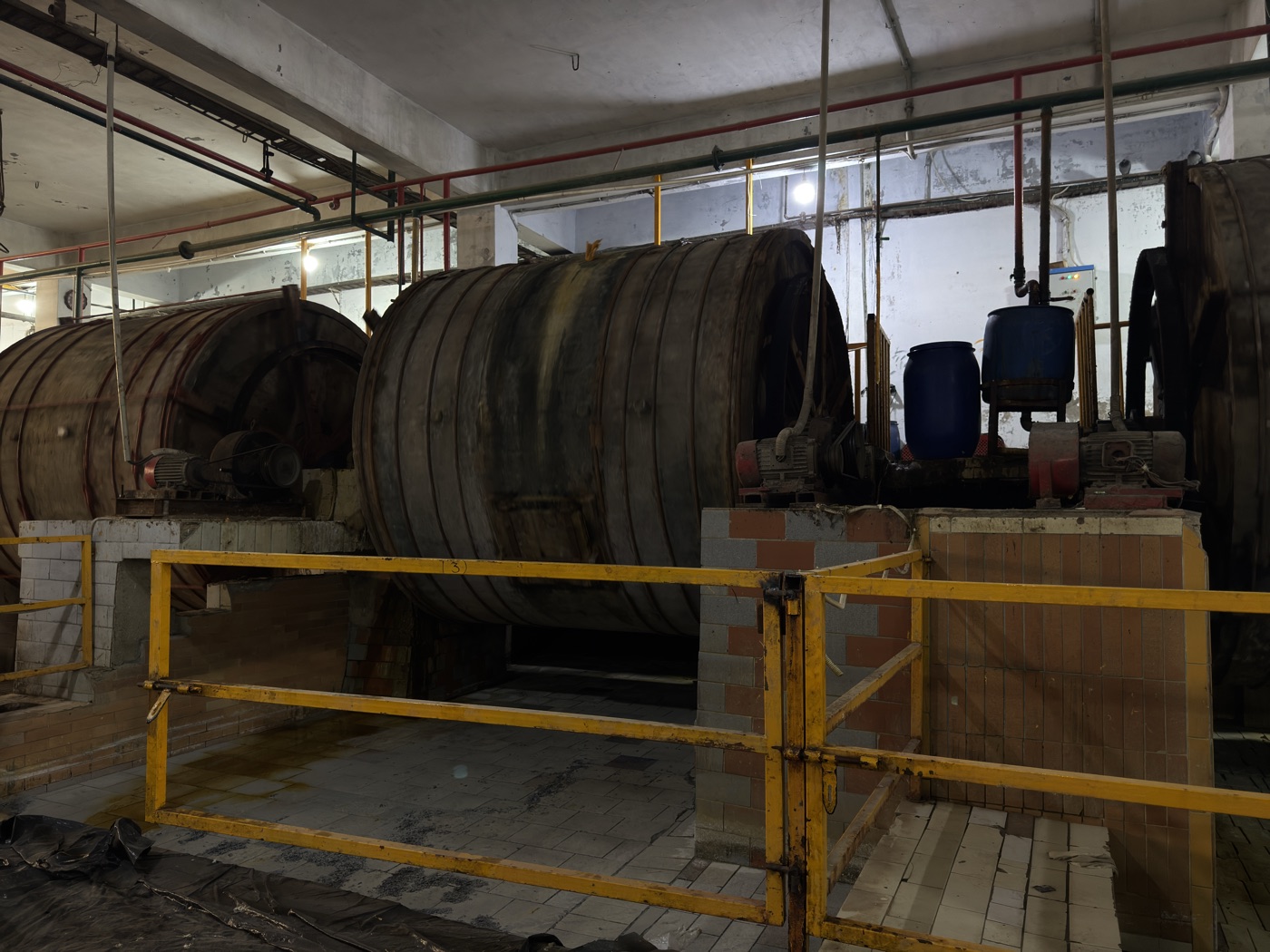
The infrastructure supporting this industry is substantial. Pakistan operates over 800 registered tanneries nationwide, concentrated in clusters around Karachi, Sialkot, Lahore, Kasur, and Multan. Of these, approximately 250 tanning units are located within Karachi’s Korangi industrial area alone — one of Asia’s largest leather tanning clusters. This concentration creates an ecosystem where raw hides move from tannery to crust to finished leather to manufacturing floor within a few kilometres.
The roots of Pakistan’s leather tradition run deep. For over a century, artisans in Karachi, Sialkot, Lahore, and Multan have refined the craft of tanning and leatherwork. This heritage, combined with modern investment in machinery, environmental compliance, and workforce training, positions Pakistan as a serious alternative to China and India for international buyers seeking a leather jacket manufacturer that delivers cost efficiency alongside quality.
Pakistan Leather Industry at a Glance
- Export value: ~$683.5 million in FY2024-25
- Livestock population: 200M+ total (33M sheep, 89M goats, 60M cattle, 48M buffalo)
- Workforce: 500,000+ employed across the leather value chain
- Tanneries: 800+ registered nationwide; ~250 in Karachi’s Korangi cluster
- Trade advantage: 0% duty to EU under GSP+ (since January 2014); 0% to UK under DCTS Enhanced Preferences
- Primary hubs: Karachi (Korangi), Sialkot, Lahore, Kasur, Multan
Why Is Karachi Pakistan’s Largest Leather Manufacturing Hub?
When international buyers think of Pakistani leather, Sialkot often comes to mind first — and rightly so. Sialkot dominates in leather gloves and sports goods. But for fashion leather goods — jackets, bags, wallets, belts, and accessories — Karachi is the centre of gravity.
Karachi’s Korangi industrial area houses approximately 250 tanning units in a concentrated zone, creating an ecosystem where raw hides move from tannery to finished leather to manufacturing floor within kilometres. This proximity drives efficiency: shorter transport times, faster material procurement, and tighter quality control from hide selection to finished garment.
Equally important, Karachi is Pakistan’s commercial capital and its primary seaport city. Both Karachi Port and Port Qasim handle the vast majority of the country’s containerised trade. For a leather goods manufacturer in Pakistan focused on exports, being based in Karachi means:
- Direct port access — finished goods reach the docks in hours, not days of inland trucking
- Lower freight costs — no long-distance domestic transport to distant ports
- Faster turnaround — shorter total lead time from final inspection to vessel loading
- Established forwarding network — daily sailings to Europe, the UK, the Americas, and the Gulf
Mac Leather operates from S/3 Allana Road, Karachi — positioned within this industrial and logistics ecosystem. Our location gives us direct access to Korangi’s tanneries for raw material sourcing and to the port for timely shipments. This translates into shorter lead times and lower landed costs for our clients in Europe, the UK, and beyond.
What Are Mac Leather’s Manufacturing Capabilities?
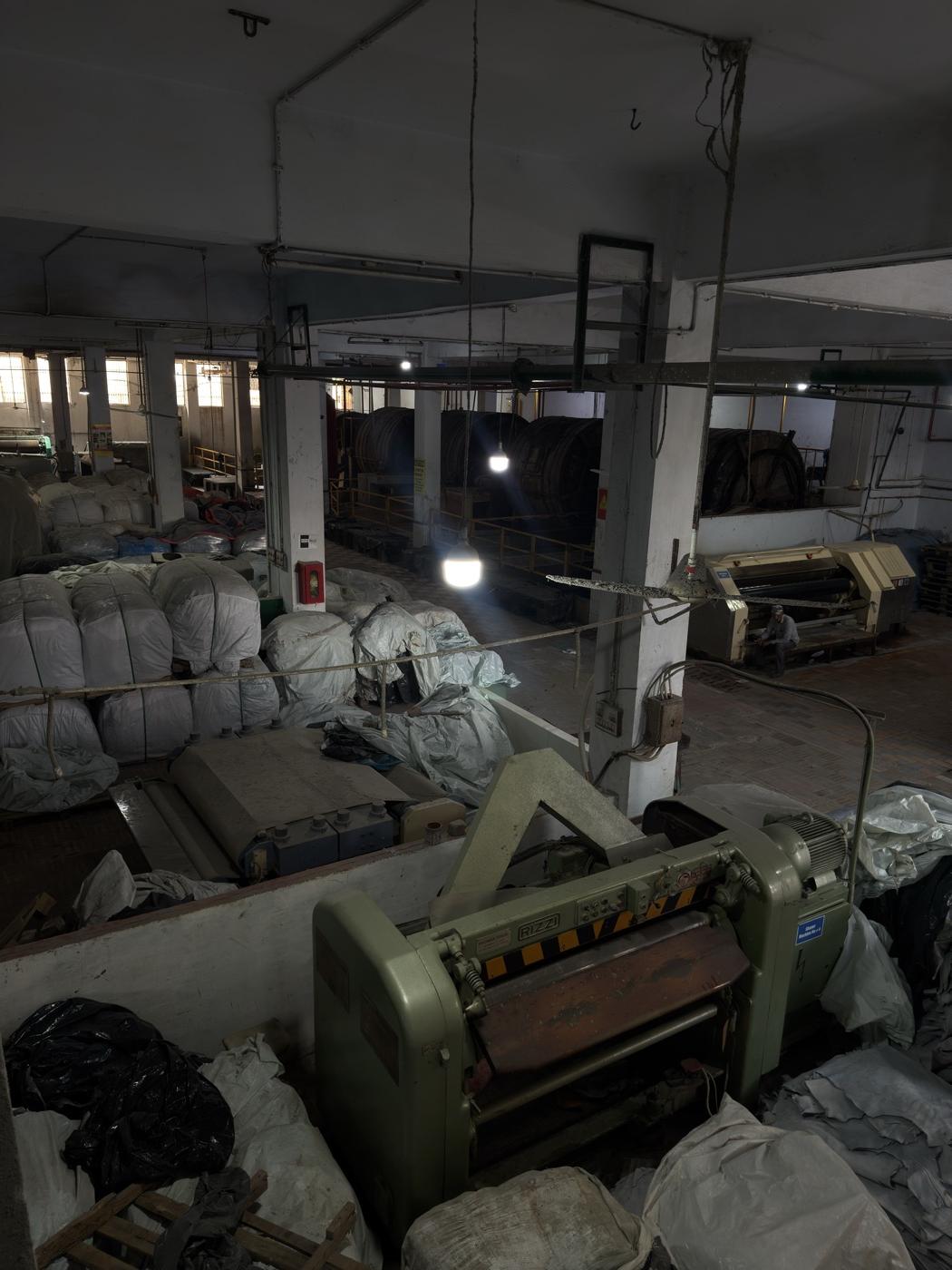
Mac Leather has spent over 25 years and three generations building a vertically integrated leather goods manufacturing operation. From pattern making to final quality inspection, every stage of production happens under one roof. There is no outsourcing of critical stages — giving us full control over quality, timelines, and cost.
Production Capabilities
- Design and Pattern Making: In-house design team capable of working from tech packs, reference samples, sketches, or mood boards. We develop patterns, grade across size ranges, and produce development samples before committing to bulk manufacturing.
- Cutting: Precision cutting using both manual artisan techniques and automated cutting systems, selected based on leather type and order complexity. Experienced cutters ensure minimal hide wastage and consistent piece quality across the production run.
- Stitching and Assembly: Multiple stitching lines staffed by operators specialising in leather garments, bags, and small goods. Industrial machines are calibrated for different leather weights — from lightweight sheepskin and lambskin to heavy cowhide and shearling.
- Finishing: Hardware fitting, edge painting, embossing, debossing, screen printing, lining insertion, and final pressing. Custom branding elements (labels, hangtags, packaging) applied per client specifications.
- Quality Control: Multi-point inspection system at cutting, post-stitching, and pre-packing stages. AQL (Acceptable Quality Level) standards applied per client requirements. Third-party inspection is welcomed.
Capacity and Flexibility
Our production facility processes thousands of leather jackets per month alongside bags, belts, wallets, and accessories. We manage seasonal demand fluctuations with flexible workforce scaling — essential for fashion-cycle clients who need Autumn/Winter production capacity without year-round fixed overhead. Our 50-piece MOQ per style per colour means we serve emerging brands and capsule drops with the same attention as high-volume orders.
What Materials Do Pakistani Leather Manufacturers Offer?
The quality of a leather jacket begins at the tannery. Pakistan’s large domestic livestock population — over 200 million animals — provides a consistent, year-round supply of raw hides without reliance on imports. Mac Leather works with trusted tannery partners in Karachi’s Korangi zone, selecting hides based on the specific requirements of each order.
Leather Types We Work With
- Sheepskin (Our Primary Material)
- Soft, lightweight, with a clean natural grain and excellent drape. Sheepskin is our workhorse leather — it offers the best balance of quality, hand-feel, and cost for most jacket styles. Pakistan’s flock of 33 million sheep ensures reliable domestic supply without seasonal shortages. Ideal for bombers, casual jackets, blazers, and mid-range fashion outerwear.
- Lambskin (Premium Option)
- Ultra-soft, lighter than sheepskin, with a buttery hand-feel that develops character with age. The premium choice for high-end fashion lines and luxury retail positioning. Excellent drape and a refined, smooth finish.
- Cowhide (Full-Grain and Top-Grain)
- Strong, durable, and structured. The right choice for classic biker jackets, moto styles, and heavy-duty outerwear where the garment needs to hold its shape. Available in various weights and finishes from smooth to pebbled.
- Goatskin
- Supple and resilient with a distinctive natural pebble grain. Lighter than cowhide but remarkably tough — an excellent strength-to-weight ratio. Popular for jackets that need to balance structure with everyday wearability. Pakistan’s 89 million goats provide abundant domestic supply.
- Shearling
- Sheepskin tanned with the wool intact — provides natural insulation for winter jackets, aviator styles, collars, and lined bodies. A premium material for cold-weather collections that commands higher retail price points.
- Suede & Nubuck
- Matte-finish leathers with a velvety texture. Suede (inner split) and nubuck (buffed grain side) create understated, contemporary silhouettes. Water-resistant finishes available on request for practical outerwear applications.
- Vegan / PU Leather
- High-quality polyurethane-based alternatives for brands with cruelty-free or vegan product lines. Modern PU leathers replicate the look and feel of genuine leather while meeting sustainability-conscious consumer expectations.
All genuine leather is processed to meet REACH chemical compliance standards and uses AZO-free dyes. We provide material test reports and compliance certificates with every shipment — essential documentation for EU and UK market entry.
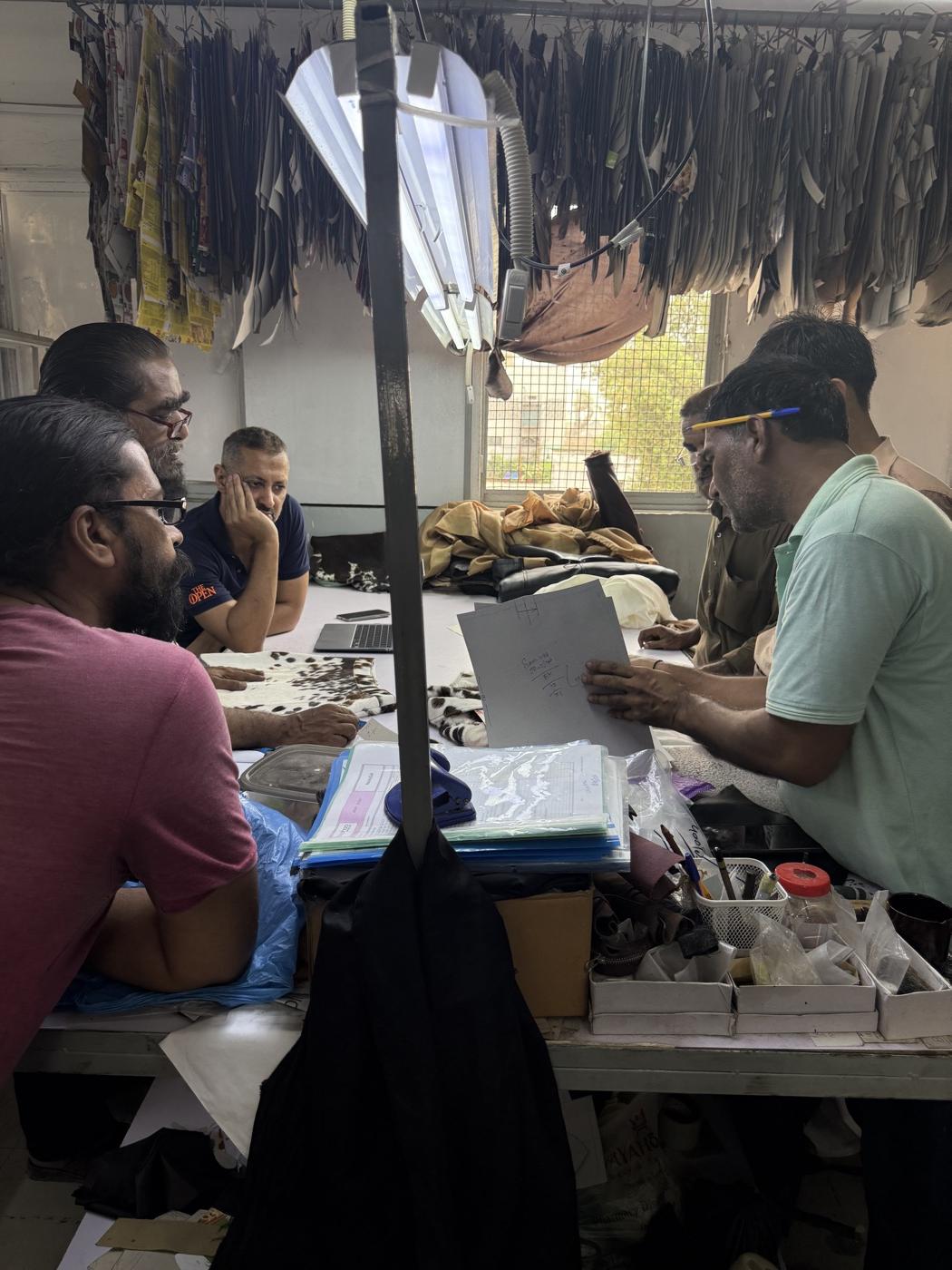
How Does Pakistan’s 0% Customs Duty Work for Leather Goods?
One of the most compelling reasons to source leather jackets from Pakistan rather than China or India is the Generalised Scheme of Preferences Plus (GSP+) trade arrangement with the European Union.
Pakistan was granted GSP+ status in January 2014. Under this arrangement, finished leather goods manufactured in Pakistan — classified under HS code 4203 (articles of apparel and clothing accessories of leather or composition leather) — enter all 27 EU member states at 0% import duty. This is not a temporary concession — GSP+ is tied to Pakistan’s ratification of 27 international conventions on human rights, labour standards, environmental protection, and good governance, providing a stable and predictable framework for long-term sourcing relationships.
Following Brexit, the United Kingdom established its own preferential trade scheme. Pakistan qualifies for DCTS Enhanced Preferences (Developing Countries Trading Scheme), which grants 0% duty on Pakistani leather goods entering the UK market. The practical effect is the same: leather jackets manufactured by Mac Leather enter both the EU and the UK duty-free.
The following table shows how Pakistan compares to other major leather-producing countries on customs duty:
| Country of Origin | EU Import Duty (HS 4203) | UK Import Duty | Notes |
|---|---|---|---|
| Pakistan (GSP+ / DCTS) | 0% | 0% | GSP+ since January 2014; UK DCTS Enhanced Preferences post-Brexit. Stable framework tied to governance conventions. |
| China | 4% | 4% | MFN rate. No preferential access to either market. |
| India | 4% | 4% | MFN rate. India does not benefit from GSP+ or equivalent for leather garments. |
| Turkey | 0% | 0% | EU customs union covers HS 4203 leather garments. However, Turkish production costs are significantly higher — often 40–60% more than Pakistan for comparable quality. |
| Bangladesh (EBA) | 0% | 0% | Everything But Arms arrangement for Least Developed Countries. Bangladesh is graduating from LDC status in 2026, which may affect future preferential access after the transition period. |
What the Numbers Mean in Practice
For a European or British brand importing 1,000 leather jackets at a CIF value of €60 per piece, the duty saving from sourcing in Pakistan versus China or India is €2,400 per shipment at the 4% MFN rate. Over a year with three to four seasonal orders, this represents €7,200–€9,600 in savings — margin that can be passed to the buyer, used to upgrade materials, or reinvested into marketing and growth.
To qualify for preferential duty rates, goods must meet rules of origin requirements — specifically, the leather must be processed and the garments manufactured in Pakistan. Mac Leather handles all Form A certification (for EU GSP+) and origin documentation as a standard part of our export process. You receive the paperwork; your freight forwarder handles the rest.
How Does Pakistan Compare to China, India, and Turkey for Leather Jacket Sourcing?
Brands sourcing leather jackets have several major manufacturing countries to evaluate. Here is how Pakistan — and Mac Leather specifically — compares on the factors that matter most to professional buyers.
Pakistan vs. China
China offers massive scale, but at increasing cost. Labour rates have risen sharply over the past decade, and leather jacket manufacturing in China now sits at a higher price point than Pakistan for comparable quality. Chinese exports face 4% MFN customs duty in both the EU and UK, while Pakistan’s GSP+ and DCTS status provides 0% duty. Communication barriers (language and time zone), higher MOQs (typically 300–500 pieces minimum), and longer lead times further limit China’s appeal for mid-size brands and emerging labels.
Pakistan vs. India
India is a strong leather producer with deep expertise, particularly in Chennai (Ambur, Vaniyambadi) and Kanpur. However, Indian manufacturers face the same 4% MFN tariff as China when exporting to Europe and the UK — India does not benefit from a GSP+ equivalent for leather garments under HS 4203. Export procedures in India can also be more complex, contributing to longer lead times. Pakistan offers comparable raw material quality, lower production costs, and duty-free access, making it the more competitive option for EU/UK-focused buyers.
Pakistan vs. Turkey
Turkey is a popular near-shore option for European brands, offering shorter shipping times (3–5 days overland) and design-forward capabilities. Turkey benefits from 0% EU duty via its customs union, which covers HS 4203 leather garments. However, Turkish manufacturing costs are substantially higher than Pakistan’s — often 40–60% more for comparable products due to higher wages, rent, and overheads. For brands where cost efficiency matters alongside duty-free access, Pakistan offers materially better value while matching Turkey’s 0% duty advantage.
Pakistan vs. Bangladesh
Bangladesh currently enjoys 0% EU duty through the Everything But Arms (EBA) arrangement available to Least Developed Countries. However, Bangladesh is graduating from LDC status in 2026, which will trigger a transition period after which EBA preferential access may be reduced or withdrawn. Bangladesh’s leather garment industry is also smaller and less developed than Pakistan’s for jackets specifically, with most capacity focused on textiles. Pakistan’s GSP+ status, based on governance conventions rather than development classification, offers a more predictable long-term framework for buyers planning multi-season sourcing partnerships.
The Pakistan Advantage: Summary
- 0% EU duty under GSP+ (since January 2014) and 0% UK duty under DCTS Enhanced Preferences
- Lower production costs than China, India, and Turkey for comparable quality
- Domestic raw materials — 200M+ livestock reduces import dependency and stabilises supply
- 800+ tanneries nationwide, with ~250 concentrated in Karachi’s Korangi cluster
- Lower MOQs — 50 pieces at Mac Leather vs. 300–500+ at most Chinese factories
- Skilled workforce — 500,000+ leather workers, with craft knowledge passed through generations
- English-speaking management — smoother communication with Western buyers, reducing errors and misunderstandings
- Direct port access from Karachi — 18–25 day sea transit to Europe, 5–7 days by air
What Certifications and Compliance Standards Does Mac Leather Meet?
Selling internationally — particularly into the European Union and the United Kingdom — demands more than skilled craftsmanship. It requires verifiable compliance with chemical, environmental, and ethical standards. Mac Leather has invested in these certifications as operational necessities for the markets we serve, not as marketing exercises.
- ISO Quality Management: Production processes follow ISO quality management principles with documented procedures, full traceability from hide to finished garment, and continuous improvement protocols.
- REACH Compliance: All materials comply with the EU’s REACH regulation (Registration, Evaluation, Authorisation, and Restriction of Chemicals), ensuring finished goods meet European chemical safety thresholds for substances of concern.
- AZO-Free Dyes: We exclusively use AZO-free dyes and finishes. Our tannery partners provide certificates of compliance for every dye lot, and we supply these certificates to clients on request.
- Ethical Manufacturing: Fair wages, safe working conditions, no child labour. We welcome factory audits from clients and third-party inspection agencies at any time.
- Environmental Responsibility: Our tannery partners participate in effluent treatment programmes mandated by Pakistan’s environmental agencies. Chrome tanning waste is processed through treatment plants before discharge, and we actively source from tanneries that are investing in cleaner production technologies.
- Byproduct-of-Meat Sourcing: All genuine leather we use is a byproduct of the meat industry. No animals are raised or slaughtered solely for their hides. By converting what would otherwise be waste from the food supply chain into durable, high-quality garments, leather manufacturing reduces landfill burden and makes full use of a resource that already exists.
Export Markets We Serve
Mac Leather has fulfilled orders for brands and retailers across:
- United Kingdom — including production for Karen Millen and independent fashion labels
- European Union — Germany, France, Italy, Netherlands, Scandinavia
- North America — United States and Canada
- Middle East — UAE, Saudi Arabia, Qatar
- Australia and New Zealand
Our documentation team handles commercial invoices, packing lists, certificates of origin, Form A (for GSP+), and all customs paperwork required for smooth clearance at your destination port.
What Manufacturing Services Does Mac Leather Offer?
Mac Leather operates across multiple service models to suit different types of clients — from established fashion houses with complete tech packs to first-time brand founders with a concept and ambition.
OEM Manufacturing
You provide the tech packs, specifications, and branding. We manufacture to your exact requirements. OEM clients benefit from our production efficiency, quality systems, and export documentation while retaining complete design ownership. This is our most common engagement model for established brands with in-house design teams.
Private Label Manufacturing
Launching a leather brand without a factory? We help you develop products from concept to finished goods. Work with our design team to create original styles or choose from existing silhouettes and customise materials, hardware, and detailing. We apply your labels, hangtags, packaging, and branding so the product arrives at your warehouse retail-ready.
Learn about our private label service in detail →
Wholesale Leather Goods
For retailers and distributors who want ready-to-sell products without the full development cycle. Our wholesale programme includes popular jacket styles, bags, belts, wallets, and accessories available for bulk purchase with optional customisation of colours, hardware, and branding.
Browse wholesale options and pricing tiers →
Custom and Bespoke Manufacturing
Unique projects — limited editions, capsule collections, designer collaborations, promotional goods. We handle short runs and complex specifications that larger factories decline. If your design involves intricate detailing, unusual materials, or unconventional construction, this is the service for you.
What Products Does Mac Leather Manufacture?
While leather jackets are our flagship product and the reason most clients first contact us, Mac Leather manufactures a complete range of leather goods. Many of our clients consolidate their sourcing with us across multiple product categories, simplifying their supply chain and benefiting from volume pricing efficiencies.
- Leather Jackets — Biker, bomber, racer, blazer, aviator, shearling, trucker, moto, and fashion styles for men and women
- Leather Bags — Tote bags, crossbody, backpacks, duffle bags, laptop bags, clutches, messenger bags
- Leather Belts — Dress belts, casual belts, reversible, braided, and custom buckle designs
- Leather Wallets — Bi-fold, tri-fold, card holders, zip-around, passport holders, money clips
- Leather Gloves — Dress gloves, driving gloves, winter-lined, touchscreen-compatible
- Leather Accessories — Keychains, luggage tags, watch straps, coasters, desk accessories, and bespoke promotional items
How Does the Manufacturing Process Work?
Whether you are placing your first order or your fiftieth, our process is designed to be transparent, efficient, and free of surprises at every stage.
-
1. Enquiry & Consultation
Share your requirements — product type, materials, quantities, target price, delivery timeline. We respond within 48 hours with a preliminary assessment, indicative pricing, and any clarifying questions. Start your enquiry here.
-
2. Sampling & Development
We develop a pre-production sample based on your tech pack, reference sample, or design brief. Sample development takes 7–10 days. You receive the physical sample for approval, with detailed photographs sent at each stage before dispatch. Revisions are included until the sample meets your specification.
-
3. Order Confirmation & Material Sourcing
Upon sample approval, we confirm the order, finalise unit pricing, and source production materials from our tannery partners. A detailed production timeline is shared, and a 30–50% advance payment secures your production slot.
-
4. Bulk Production
Cutting, stitching, finishing, and assembly proceed on the agreed timeline of 4–6 weeks. You receive progress updates with photographs at key milestones. Any issues are flagged to you immediately for resolution.
-
5. Quality Inspection & Packing
Every piece undergoes multi-point quality inspection at cutting, post-stitching, and pre-packing stages. Products are packed per your specifications — polybags, dust bags, hangtags attached, barcodes applied. Third-party inspection is welcomed at any point.
-
6. Shipping & Documentation
We arrange freight (FOB Karachi, CIF, or DDP as agreed), prepare all export documentation including GSP+ Form A for duty-free EU entry and certificates of origin for UK DCTS, and provide tracking information. Typical transit: 18–25 days by sea to Europe, 5–7 days by air.
Typical lead time: 8 to 12 weeks from initial consultation to shipment, depending on order size, design complexity, and shipping method.
Frequently Asked Questions About Leather Jacket Manufacturing in Pakistan
What is the minimum order quantity for leather jackets from Pakistan?
At Mac Leather, our minimum order quantity is 50 pieces per style per colour. This makes us accessible to emerging brands, capsule collections, and mid-size retailers — not just large-volume buyers. Most Chinese factories require 300–500 pieces minimum. We work with you to optimise patterns and materials so smaller production runs remain cost-effective without compromising quality.
Do Pakistani leather jackets qualify for duty-free import to the EU and UK?
Yes. Pakistan has benefited from the EU’s GSP+ (Generalised Scheme of Preferences Plus) since January 2014, which grants 0% customs duty on finished leather goods under HS code 4203 exported to all 27 EU member states. Post-Brexit, the UK provides equivalent 0% duty through its DCTS Enhanced Preferences scheme. This gives Pakistan-made leather jackets a significant cost advantage over identical products manufactured in China or India, where MFN tariffs of 4% apply. Turkey also enjoys 0% EU duty via its customs union, but with substantially higher production costs.
How long does it take to manufacture a leather jacket order in Pakistan?
A typical production cycle at Mac Leather runs 8 to 12 weeks from initial consultation to shipment. This includes sample development (7–10 days), revisions (5–7 days), bulk production (4–6 weeks), and quality inspection plus shipping (1–2 weeks). Rush orders can be accommodated depending on style complexity and current production capacity.
What types of leather are available from Pakistani manufacturers?
Pakistan produces a wide range of leathers thanks to its livestock population of over 200 million animals. At Mac Leather, our primary material is sheepskin — soft, lightweight, with a clean grain and excellent value across most jacket styles. For premium lines, we offer lambskin — ultra-soft with a luxury hand-feel. We also work with full-grain cowhide (durable, structured), goatskin (supple with a distinctive pebble grain), shearling (insulating, textured), suede and nubuck (matte-finish), and vegan/PU leather for cruelty-free collections. All genuine hides are sourced from regulated tanneries that meet REACH and AZO-free compliance standards.
Why is Karachi a major leather manufacturing hub?
Karachi is home to the Korangi industrial zone, which houses approximately 250 tanning units — one of Asia’s largest leather tanning clusters. This concentration means raw hides, finished leather, and garment manufacturing all happen within a few kilometres, driving efficiency and quality control. Karachi also operates Pakistan’s main seaports (Port Qasim and Karachi Port), giving Karachi-based manufacturers like Mac Leather a logistics advantage with direct access to international shipping lanes, shorter lead times, and lower freight costs compared to inland manufacturing centres.
How does Pakistan compare to China, India, and Turkey for leather jacket sourcing?
Pakistan offers 0% EU and UK customs duty under GSP+ and DCTS, while China and India face 4% MFN tariffs. Turkey also enjoys 0% EU duty via its customs union but has significantly higher production costs — typically 40–60% more than Pakistan for comparable quality. Pakistan’s additional advantages include lower labour costs, domestic raw material supply from 200M+ livestock, a skilled workforce of 500,000+ leather workers, lower MOQs (50 pieces at Mac Leather), and English-speaking management teams.
What compliance certifications do Pakistani leather manufacturers hold?
Mac Leather follows ISO quality management standards and ensures all materials comply with the EU’s REACH regulation. We exclusively use AZO-free dyes and finishes, maintain ethical labour practices with fair wages and safe working conditions, and welcome factory audits from clients and third-party inspectors. Our tannery partners participate in effluent treatment programmes mandated by Pakistan’s environmental agencies.
Request a Free Quote — We Respond Within 48 Hours
Whether you are a fashion brand developing your next collection, a retailer seeking wholesale leather jackets at competitive pricing, or an entrepreneur launching a leather goods line — Mac Leather has the experience, capacity, and certifications to deliver. Tell us about your project: the product, the materials, the quantities, and your target market. We will respond with a detailed proposal including unit pricing, a production timeline, and sample options.
- Email: info@macleatherco.com
- Pakistan: +92 332 2121 282
- UK: +44 7733 077 341
- WhatsApp: Message us on WhatsApp
- Address: S/3 Allana Road, Karachi, Pakistan