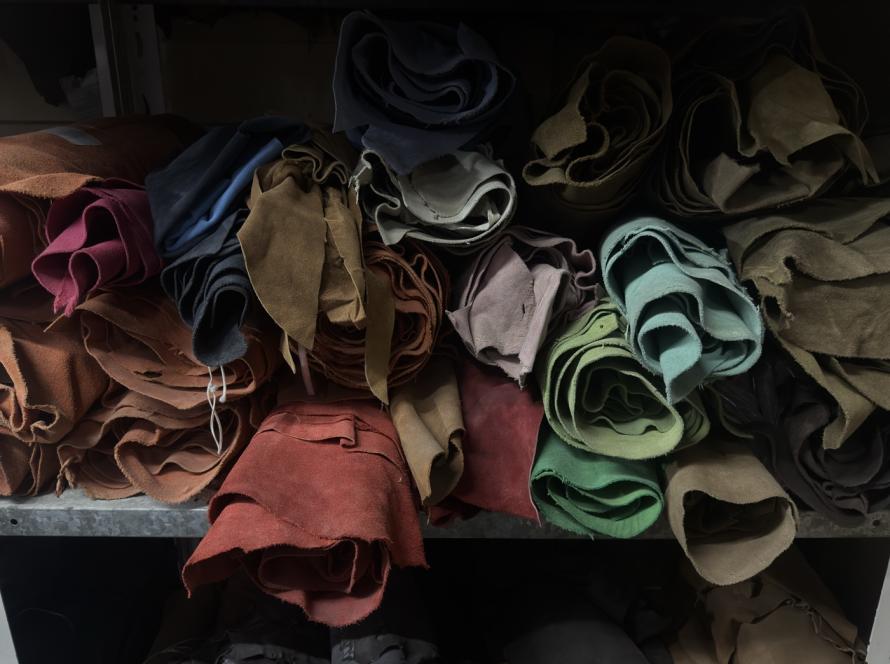

The leather you choose determines everything about the finished jacket: how it feels in the buyer’s hands, how it drapes on the body, how long it lasts, what it weighs, and what price it can command at retail. Choosing the wrong leather for a given style or market segment is one of the most expensive mistakes a brand can make, and it is not always obvious until hundreds of jackets are already in stock.
We have been manufacturing wholesale leather jackets in Karachi for over 25 years, working with every leather type covered in this guide. Sheepskin is our primary material and the one we have the deepest expertise in, but we produce in all of the leathers described below. This guide covers each type with the specific, measurable properties you need to make sourcing decisions: thickness, weight, durability, best applications, and relative cost.
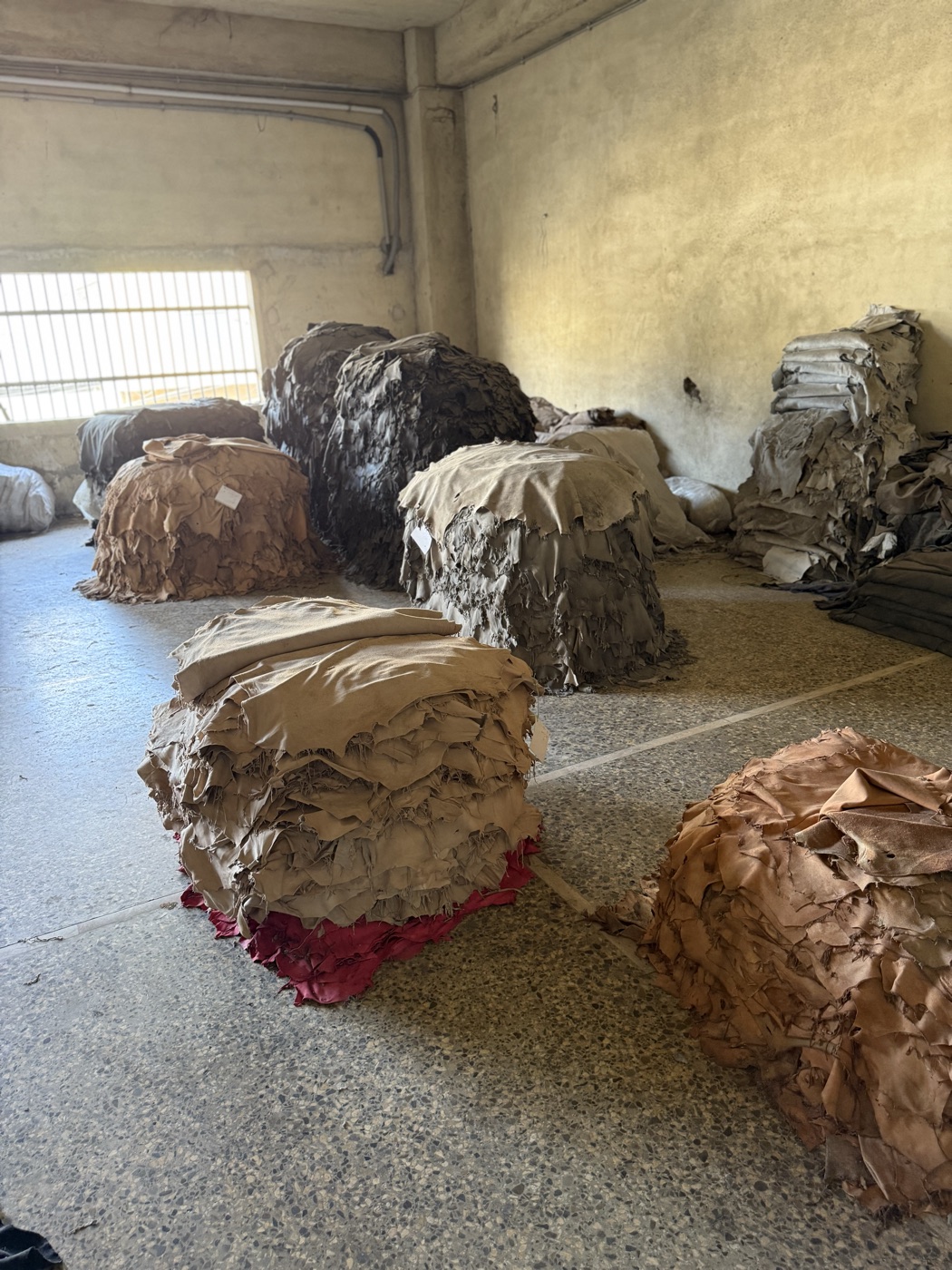
How is leather graded before we discuss types?
Before considering the animal source, understand how leather is graded by processing method. This applies across all animal types:
- Full-grain: The outermost surface of the hide, untouched. No sanding, no buffing, no artificial finish. Full-grain retains the hide’s complete natural grain pattern and is the strongest, most durable grade. It develops a patina with age that improves its appearance. This is the highest quality and highest cost grade.
- Top-grain: The surface has been lightly sanded or buffed to remove minor imperfections, then treated with a finishing coat. The result is more uniform than full-grain but with slightly less natural character. Still high quality and the most common grade in mid-to-premium jackets.
- Corrected-grain: More heavily processed. The surface is sanded to remove defects, then stamped with an artificial grain pattern and coated. More affordable and uniform, but it lacks the depth and ageing characteristics of higher grades. Common in mass-market production.
- Split leather (often labelled “genuine leather”): The lower layers of the hide after the top grain has been removed. Thinner, weaker, and lacking the structural integrity of grain-side leather. Despite the reassuring name, “genuine leather” is the lowest grade of real leather. We do not recommend it for jackets.
For any jacket you intend to sell at a credible price point, full-grain or top-grain is the standard. Below that, your customers will notice the difference, even if they cannot articulate why.
What is sheepskin leather?
Sheepskin is the hide of an adult sheep. It is our primary material at Mac Leather and the leather we recommend most frequently for fashion jacket production. Sheepskin offers the best balance of softness, weight, durability, and cost for the broadest range of jacket styles and market segments.
Properties
| Property | Specification |
|---|---|
| Thickness | 0.6–1.0 mm |
| Weight per sq ft | 1.5–2.5 oz |
| Finished jacket weight | 1.3–2.0 kg |
| Texture | Soft, smooth, fine grain. Slightly more visible grain than lambskin but significantly softer than cowhide. |
| Durability | Moderate to good. More resilient than lambskin due to the thicker, more mature fibre structure of adult sheep hide. |
| Break-in period | Minimal. Sheepskin is comfortable from the first wear. |
| Natural properties | Sheepskin contains residual lanolin, which provides mild water resistance and helps the leather maintain suppleness over time. |
Best applications
Sheepskin is versatile enough to work across nearly every jacket style. It is our most-requested material for bombers, cafe racers, shirt-style jackets, and women’s biker jackets. Its softness and lightweight drape make it particularly strong for fashion-focused collections in the $200 to $500 retail bracket.
Pakistan has over 200 million livestock, and sheep are a significant proportion. Karachi’s tannery cluster processes millions of sheepskins annually, which gives us direct access to high-quality skins at competitive prices with short supply lead times.
Price tier
Mid-range. Sheepskin sits between cowhide (lower) and lambskin (higher) in material cost. Manufacturing cost for a sheepskin jacket: approximately $80+ depending on style complexity.
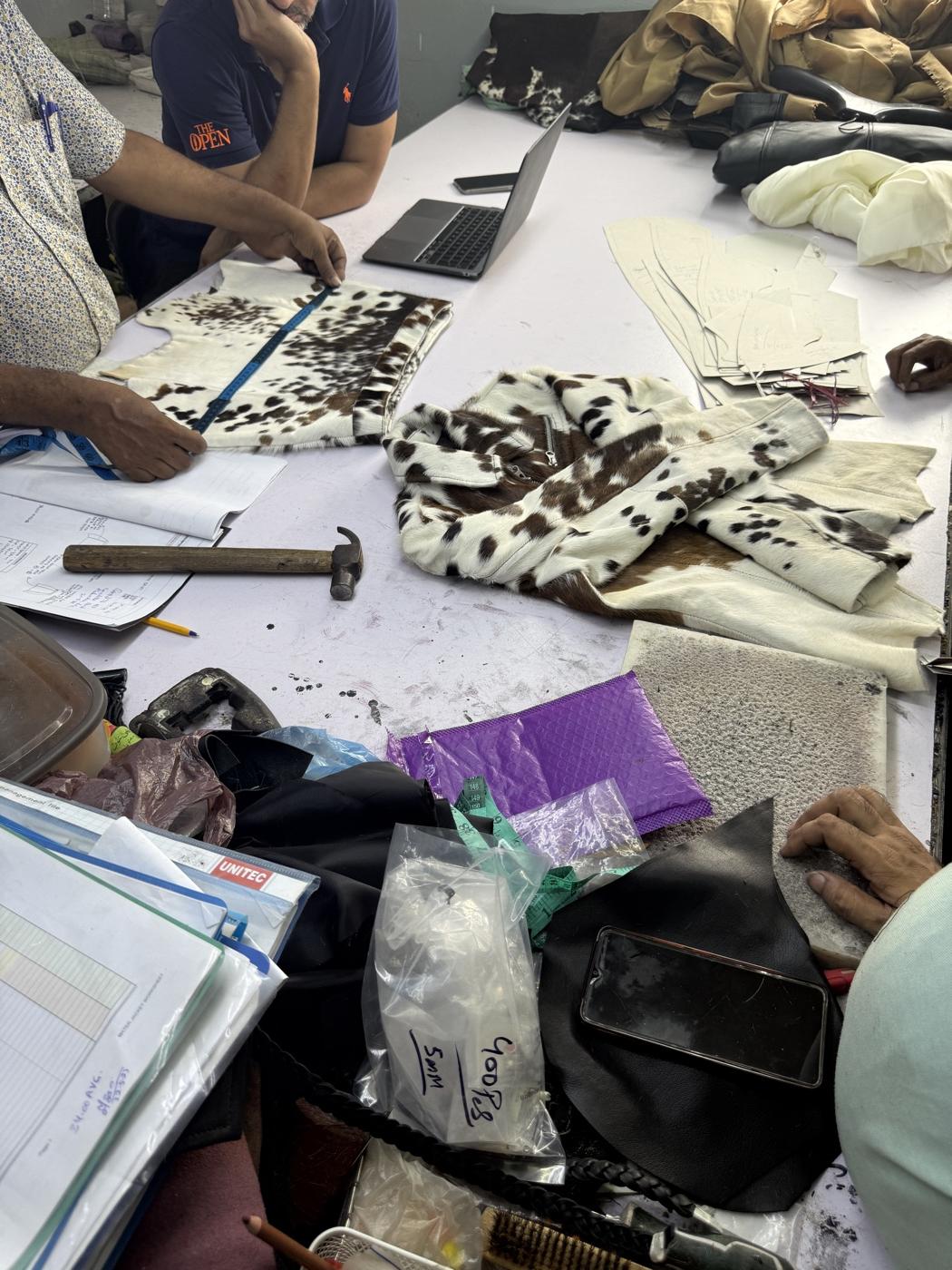
What is cowhide leather?
Cowhide comes from adult cattle and is the most widely used leather in the world. It is the material most people picture when they think of a tough, structured leather jacket that lasts a lifetime.
Properties
| Property | Specification |
|---|---|
| Thickness | 1.0–1.4 mm (for jackets; thicker cuts exist for belts and motorcycle armour) |
| Weight per sq ft | 3.0–4.5 oz |
| Finished jacket weight | 2.0–3.2 kg |
| Texture | Firm, substantial, pronounced natural grain. May show subtle natural markings that add character. |
| Durability | Excellent. Highest abrasion resistance, tear strength, and puncture resistance of any common jacket leather. |
| Break-in period | Significant. New cowhide jackets are stiff and require weeks to months of wear to soften and mould to the body. |
Cowhide grades explained
- Full-grain cowhide: The premium tier. Natural surface intact. Develops rich patina. Used in heritage brands and premium biker jackets. The hide’s natural markings, healed scratches, insect bites, growth marks, are considered character features, not defects.
- Top-grain cowhide: Lightly corrected surface. More uniform appearance. The most common grade for mid-range to premium jackets. Easier to work with in production because surface consistency reduces waste at cutting.
- Corrected-grain cowhide: Heavily processed and embossed. Uniform and affordable. Used in mass-market and fast-fashion leather jackets where cost is the primary driver.
Best applications
Classic biker/moto jackets, motorcycle gear, Western-style jackets, heavy-duty bombers, and any design where structure, weight, and long-term durability are priorities. Cowhide is the traditional material for the double-rider biker jacket because its firmness holds lapels in shape and its thickness provides genuine abrasion protection.
Price tier
Moderate. Cowhide is more affordable per square foot than sheepskin or lambskin because the hides are much larger (40 to 55 sq ft per hide vs 6 to 9 sq ft for sheepskin), which means less waste at cutting and more efficient material utilisation. Manufacturing cost for a cowhide jacket: approximately $60 to $110.
What is goatskin leather?
Goatskin is an underappreciated leather that offers an excellent balance between softness and durability. Pakistan is one of the world’s largest producers of high-quality goatskin, and it is a material we work with regularly.
Properties
| Property | Specification |
|---|---|
| Thickness | 0.7–1.0 mm |
| Weight per sq ft | 2.0–3.0 oz |
| Finished jacket weight | 1.5–2.2 kg |
| Texture | Distinctive pebbled grain. Natural, organic appearance. Softer than cowhide, firmer than sheepskin. |
| Durability | Good to excellent. Goatskin’s tight fibre structure gives it impressive tensile strength relative to its weight. Natural lanolin content provides mild water resistance. |
| Break-in period | Short. Goatskin softens quickly while retaining its structure. |
Best applications
Versatile across styles. Works well for bombers, field jackets, casual overshirts, and designs where you want a balance of comfort and longevity. The pebbled grain provides visual texture that photographs well for e-commerce, which is an underrated consideration for wholesale buyers selling through online channels.
Price tier
Moderate to high. Goatskin sits between cowhide and lambskin in cost, similar to sheepskin. Manufacturing cost for a goatskin jacket: approximately $70 to $120.
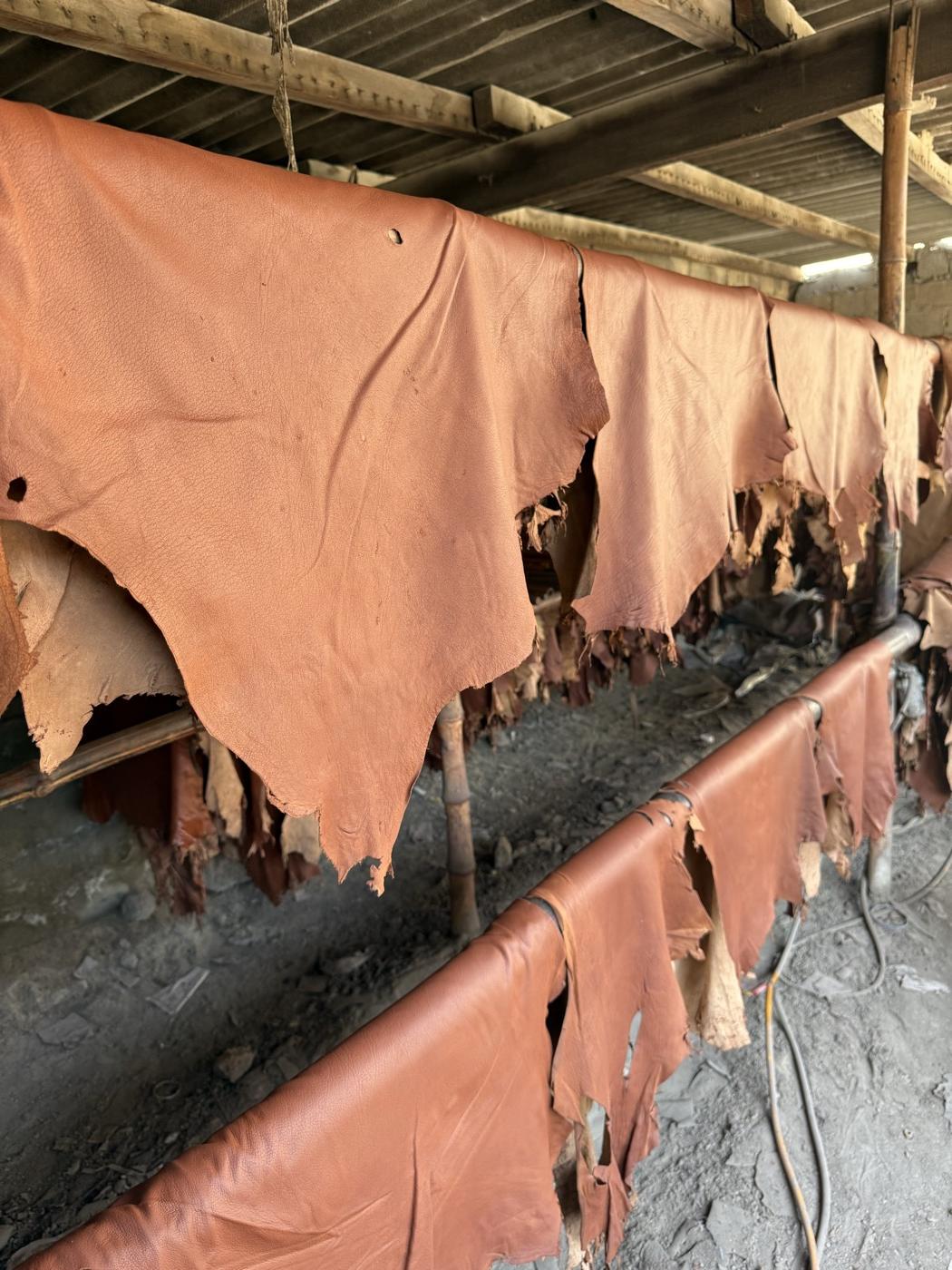
What is lambskin leather?
Lambskin comes from young sheep under approximately one year of age. It is the most luxurious leather commonly used in jacket production, prized for its exceptional softness and fine grain. We offer lambskin as a premium option for brands targeting the luxury segment.
Properties
| Property | Specification |
|---|---|
| Thickness | 0.5–0.8 mm |
| Weight per sq ft | 1.2–1.8 oz |
| Finished jacket weight | 1.0–1.6 kg |
| Texture | Exceptionally soft, buttery hand-feel. Very fine, tight grain with a natural sheen. |
| Durability | Moderate. More susceptible to scratches, scuffs, and wear than sheepskin or cowhide due to the thinner, less mature fibre structure. |
| Break-in period | None. Lambskin is soft and supple from the first moment. |
Best applications
Luxury fashion jackets, slim-fit designs, cafe racers, minimalist bombers, and any application where the softest possible hand-feel is the primary selling point. Lambskin is particularly strong in womenswear and in the $400 and above retail segment. It is the leather that designer brands use for their flagship jacket offerings.
Price tier
High. Lambskin costs more per square foot than sheepskin because the hides are smaller (the animal is younger and therefore smaller), supply is more limited, and premium demand drives pricing up. Manufacturing cost for a lambskin jacket: approximately $80 to $140.
Sheepskin vs lambskin: a common point of confusion
Buyers frequently use “sheepskin” and “lambskin” interchangeably. They are not the same material. Lambskin comes from younger animals and is thinner, softer, and more delicate. Sheepskin comes from adult sheep and is slightly thicker, more durable, and less expensive. For most wholesale applications, sheepskin provides the better balance of quality and commercial viability. We recommend lambskin specifically when the brand is positioned at the luxury tier and the customer is prepared to pay for the premium and accept the reduced durability.
What is shearling leather?
Shearling is sheepskin or lambskin that has been tanned with the wool still attached. The leather forms the exterior of the garment while the wool faces inward, providing natural insulation.
Properties
| Property | Specification |
|---|---|
| Leather thickness | 0.8–1.2 mm (plus wool pile of 10–25 mm) |
| Finished jacket weight | 2.5–4.0 kg (heavier due to wool) |
| Texture | Smooth leather exterior with natural wool interior. The wool is typically sheared to a uniform length for consistency. |
| Insulation | Excellent. Wool is one of the best natural insulators, providing warmth without synthetic padding. |
| Durability | Good. The leather exterior handles weather well, and the wool interior retains its loft for years with proper care. |
Best applications
Aviator jackets, rancher coats, shearling-collared bombers, and cold-weather outerwear. Shearling jackets are inherently premium products due to the material cost and construction complexity. They sell best in markets with genuine winter seasons: Northern Europe, the UK, Canada, and the northern United States.
Price tier
High. Shearling is one of the most expensive jacket materials due to the cost of quality skins and the additional labour required to work with the thick, wool-backed material. Manufacturing cost for a shearling jacket: approximately $120 to $200 or more, depending on wool pile length and garment complexity.
What is suede?
Suede is not a separate animal hide. It is the inner (flesh) side of a split hide, buffed to create a soft, napped texture. Suede can be derived from sheep, goat, cow, or pig hides, though sheep and goat suede are the most common for jackets.
Properties
| Property | Specification |
|---|---|
| Thickness | 0.5–0.9 mm (varies by source hide) |
| Weight per sq ft | 1.5–2.5 oz |
| Finished jacket weight | 1.2–1.8 kg |
| Texture | Soft, velvety, matte finish. The napped surface catches light from different angles, creating visual depth that smooth leather does not. |
| Durability | Lower than smooth leather. Suede stains easily, absorbs water, and shows marks more readily. Requires more careful maintenance. |
Best applications
Suede bombers, trucker-style jackets, overshirts, Western-style jackets, and spring/summer outerwear. Suede excels in lighter colours, tan, camel, stone, olive, dusty pink, that would appear flat in smooth leather but gain richness from the napped surface. Suede jackets have a softer, more approachable aesthetic than smooth leather, which appeals to consumers who find traditional leather jackets too aggressive.
Price tier
Moderate. Because suede is made from a split (the lower layer of the hide), it is generally less expensive than the corresponding smooth full-grain leather. Manufacturing cost for a suede jacket: approximately $60 to $100.
What is nubuck?
Nubuck looks similar to suede but is made from the outer (grain) side of the hide, lightly sanded to create a fine nap. This distinction matters: because nubuck retains the grain structure, it is significantly more durable than suede while offering a similar velvety texture.
Properties
| Property | Specification |
|---|---|
| Thickness | Comparable to the source hide’s full thickness (0.8–1.2 mm for cowhide nubuck) |
| Texture | Fine, tight nap. Smoother and more refined than suede. Often described as velvety. |
| Durability | Significantly better than suede. The intact grain structure provides structural integrity that splits cannot match. |
| Maintenance | Requires more care than smooth leather. Susceptible to staining and water marks, though less so than suede. |
Best applications
Premium casual jackets, luxury bombers, and upmarket menswear where the soft, matte aesthetic of suede is desired but better durability is required. Nubuck is also an excellent choice for accessories and detailing on mixed-material jackets.
Price tier
Moderate to high. More expensive than suede because it uses the grain side of the hide (the premium portion). Manufacturing cost for a nubuck jacket: approximately $75 to $130.
What is buffalo leather?
Buffalo leather comes from water buffalo, which are abundant in South and Southeast Asia. It shares characteristics with cowhide but is typically thicker and has a more pronounced, rugged grain pattern.
Properties
| Property | Specification |
|---|---|
| Thickness | 1.2–1.6 mm |
| Weight per sq ft | 3.5–5.0 oz |
| Finished jacket weight | 2.5–3.5 kg |
| Texture | Coarse, heavily grained, rugged. More textured than cowhide with a distinctly rustic character. |
| Durability | Excellent. Comparable to or exceeding cowhide in abrasion and tear resistance. |
| Break-in period | Long. Buffalo leather is stiff and requires significant wear to soften. |
Best applications
Heavy-duty biker jackets, motorcycle gear, vintage-style outerwear, and workwear-inspired designs. Buffalo leather suits brands that want a deliberately rugged, unrefined aesthetic. It is also a strong choice for the motorcycle market where genuine abrasion protection is a selling point, not just a styling reference.
Pakistan has a large buffalo population, which makes buffalo hides readily available and competitively priced through our Karachi tannery network.
Price tier
Moderate. Similar to or slightly below cowhide in material cost, though the heavier weight means more leather consumption per jacket. Manufacturing cost: approximately $65 to $115.
What about vegan leather (PU/faux leather)?
Vegan leather is not made from animal hides. The most common type is polyurethane (PU) coated fabric. Newer alternatives include bio-based materials derived from cactus (Desserto), apple waste (AppleSkin), mushroom mycelium (Mylo), and pineapple leaf fibre (Pinatex), though these remain niche and significantly more expensive than PU.
Properties
| Property | Specification |
|---|---|
| Thickness | 0.8–1.2 mm (controlled during manufacturing) |
| Finished jacket weight | 1.0–1.8 kg |
| Texture | Varies widely. High-quality PU closely mimics smooth leather. Lower quality appears plasticky and feels synthetic. |
| Durability | Moderate for high-quality PU. The surface coating tends to crack, peel, or flake after 2 to 5 years. Unlike genuine leather, PU does not improve with age; it degrades. |
| Water resistance | Good. PU does not absorb water, which is an advantage over genuine leather in wet conditions. |
Best applications
Brands targeting vegan, cruelty-free, or sustainability-conscious consumers. Fast-fashion lines that prioritise trend responsiveness and volume over longevity. Budget-friendly collections where keeping the retail price under $100 is a priority. Also useful as an accent material in hybrid designs that combine genuine leather and PU panels.
Price tier
Low. Manufacturing cost for a PU leather jacket: approximately $25 to $55. The material cost is a fraction of genuine leather, which makes it attractive for high-volume, lower-margin business models.
Master comparison: all leather types at a glance
| Leather Type | Thickness (mm) | Jacket Weight (kg) | Softness | Durability | Mfg Cost Range | Best Market Segment |
|---|---|---|---|---|---|---|
| Sheepskin | 0.6–1.0 | 1.3–2.0 | High | Moderate-Good | $65–$110 | Mid-range to premium fashion |
| Cowhide (full-grain) | 1.0–1.4 | 2.0–3.2 | Low (initially) | Excellent | $60–$110 | Rugged / moto / heritage |
| Cowhide (top-grain) | 1.0–1.4 | 2.0–3.2 | Low-Medium | Very Good | $55–$100 | Mid-range everyday |
| Cowhide (corrected) | 0.9–1.3 | 1.8–2.8 | Medium | Good | $45–$85 | Mass market / fast fashion |
| Goatskin | 0.7–1.0 | 1.5–2.2 | Medium-High | Good-Excellent | $70–$120 | Versatile mid-to-premium |
| Lambskin | 0.5–0.8 | 1.0–1.6 | Highest | Moderate | $80–$140 | Luxury fashion |
| Shearling | 0.8–1.2 + wool | 2.5–4.0 | High (interior) | Good | $120–$200+ | Premium winter outerwear |
| Suede | 0.5–0.9 | 1.2–1.8 | High (napped) | Lower | $60–$100 | Casual / seasonal |
| Nubuck | 0.8–1.2 | 1.5–2.5 | High (napped) | Good | $75–$130 | Premium casual |
| Buffalo | 1.2–1.6 | 2.5–3.5 | Low | Excellent | $65–$115 | Heavy-duty / moto / workwear |
| Vegan (PU) | 0.8–1.2 | 1.0–1.8 | Varies | Moderate (degrades) | $25–$55 | Vegan / budget / fast fashion |
How should you choose the right leather for your line?
The decision comes down to three factors: your target customer, your retail price point, and the jacket style you are producing.
- Fashion-forward, $200–$450 retail: Sheepskin. The best balance of quality, softness, weight, and cost. This is the sweet spot for the majority of independent brands.
- Luxury, $450+ retail: Lambskin for maximum softness or full-grain cowhide for heritage-inspired pieces.
- Durable everyday wear, $150–$350 retail: Top-grain cowhide or goatskin. Tougher, longer-lasting, and price-competitive.
- Casual/seasonal, $150–$300 retail: Suede (sheep or goat). Different aesthetic, strong for transitional-season collections.
- Cold-weather premium, $400+ retail: Shearling. A winter statement piece with genuine functional warmth.
- Moto/workwear, $200–$400 retail: Full-grain cowhide or buffalo. Structure, weight, and durability are the selling points.
- Vegan/budget, under $150 retail: Quality PU. Different market, different economics, but genuine demand.
What leather does Mac Leather stock and recommend?
We manufacture in all of the leather types described above. Our sourcing is anchored in Karachi’s tannery cluster, where over 800 tanneries within Pakistan process hides from one of the world’s largest livestock populations (200 million+ animals). This gives us direct, short-supply-chain access to sheepskin, cowhide, goatskin, lambskin, buffalo, and suede at competitive pricing.
Sheepskin is our signature material. We understand how it behaves at every stage of production, from cutting to stitching to finishing, and we have the tannery relationships to source consistent quality in the widths, weights, and colours our clients need. When you order sheepskin from us, you are ordering from a team that has been working with this specific material for over 25 years.
We offer leather swatch books so you can physically compare materials before making a decision. For private label clients, we also provide detailed guidance on which leather best suits specific jacket styles and price targets.
Want to compare leather types for your next collection? Request a swatch book with samples of every material listed above, along with unit pricing for your specific design. Email info@macleatherco.com or call +44 7733 077 341 (UK) / +92 332 2121 282 (Pakistan). You can also browse our custom leather jacket programme to see the full range of options available.